Summary
Across Australia, and particularly throughout Queensland, more homeowners are rethinking how their properties can work harder for them. Rising living costs, multi-generational households, rental demand and a growing awareness of environmental responsibility have all contributed to the surge in popularity of granny flats. However, adding a secondary dwelling is no longer just about creating extra square metres — it is about creating smarter, more sustainable living spaces that enhance both lifestyle and long-term value.
A granny flat built today should not only meet immediate needs, but also perform efficiently for decades to come. That means considering far more than layout and appearance. True sustainability begins at the design stage and continues through material selection, construction methods, energy performance and long-term durability. Every decision — from the type of timber used in the frame to the insulation behind the walls — plays a role in shaping the building’s environmental footprint.
A genuinely premium timber granny flat goes well beyond surface-level eco claims. It is:
- Thoughtfully designed to maximise natural light, airflow and passive temperature control.
- Energy-efficient, reducing reliance on heating and cooling systems.
- Built from responsibly sourced materials, particularly certified timber that stores carbon and supports renewable forestry practices.
- Constructed for longevity, minimising maintenance, repairs and future waste.
Sustainability is not achieved by adding a single ‘green’ feature. It is the result of integrating performance, efficiency and durability into the entire structure. When done properly, an eco-friendly granny flat not only reduces environmental impact but also delivers tangible everyday benefits — lower energy bills, improved indoor comfort, healthier air quality and stronger resale appeal.
In this guide, we take a deeper look at what truly makes a timber granny flat eco-friendly. We explore how sustainable materials improve long-term performance, how intelligent design reduces operational costs, and why investing in quality construction today creates a more comfortable, resilient and cost-effective home for tomorrow.
Key Points at a Glance
- Responsibly sourced timber is one of the most sustainable building materials available.
- High-performance insulation dramatically reduces long-term energy consumption.
- Energy-efficient windows and glazing improve comfort year-round.
- Low-VOC finishes protect indoor air quality.
- Sustainable design reduces operational costs and environmental impact.
- Premium construction ensures durability, minimising waste and future repairs.
- Smart orientation and passive solar design enhance natural heating and cooling.
Sustainable Materials for Your Granny Flat: What Makes a Premium Timber Home Truly Eco-Friendly
Why Sustainability Matters in Granny Flat Construction
Across Queensland and throughout Australia, sustainability is no longer viewed as a luxury feature — it is an expectation. Homeowners are becoming increasingly conscious of how their building decisions impact not only their finances, but also the environment and the wellbeing of those living within the space.
Granny flats, in particular, present a unique opportunity. Because they are compact dwellings, every design choice has a magnified effect. A well-planned granny flat can operate with remarkable efficiency, offering comfortable, independent living while maintaining a smaller environmental footprint than a traditional home.
Whether your granny flat is being built to accommodate ageing parents, provide independent living for adult children, generate rental income, or support downsizing plans, it should be designed with both present needs and future performance in mind. Sustainability ensures that the dwelling remains efficient, durable and cost-effective for decades — not just years.
A thoughtfully designed and properly constructed granny flat can:
- Reduce household energy consumption by incorporating high-performance insulation, efficient glazing and passive design principles that minimise reliance on heating and cooling systems.
- Lower long-term maintenance costs through durable materials that resist weathering, moisture damage and structural movement.
- Increase overall property value as buyers and tenants increasingly prioritise energy efficiency and sustainable design.
- Improve comfort and liveability with stable indoor temperatures, better airflow and healthier air quality.
- Minimise environmental impact by reducing embodied carbon, lowering operational energy use and selecting responsibly sourced materials.
However, sustainability is not achieved simply by labelling a build as ‘eco-friendly’. Not all granny flats are created equal. Two dwellings may look similar externally, yet perform very differently over time. The true distinction lies in the details — the quality of materials behind the walls, the precision of construction, the insulation levels in the roof cavity, the orientation of windows and the integrity of structural design.
Short-term cost-cutting often leads to long-term inefficiencies. Poor insulation, inferior timber, inadequate moisture protection or rushed construction can result in higher energy bills, greater maintenance demands and reduced lifespan. In contrast, a premium timber granny flat is engineered to perform consistently and efficiently year after year.
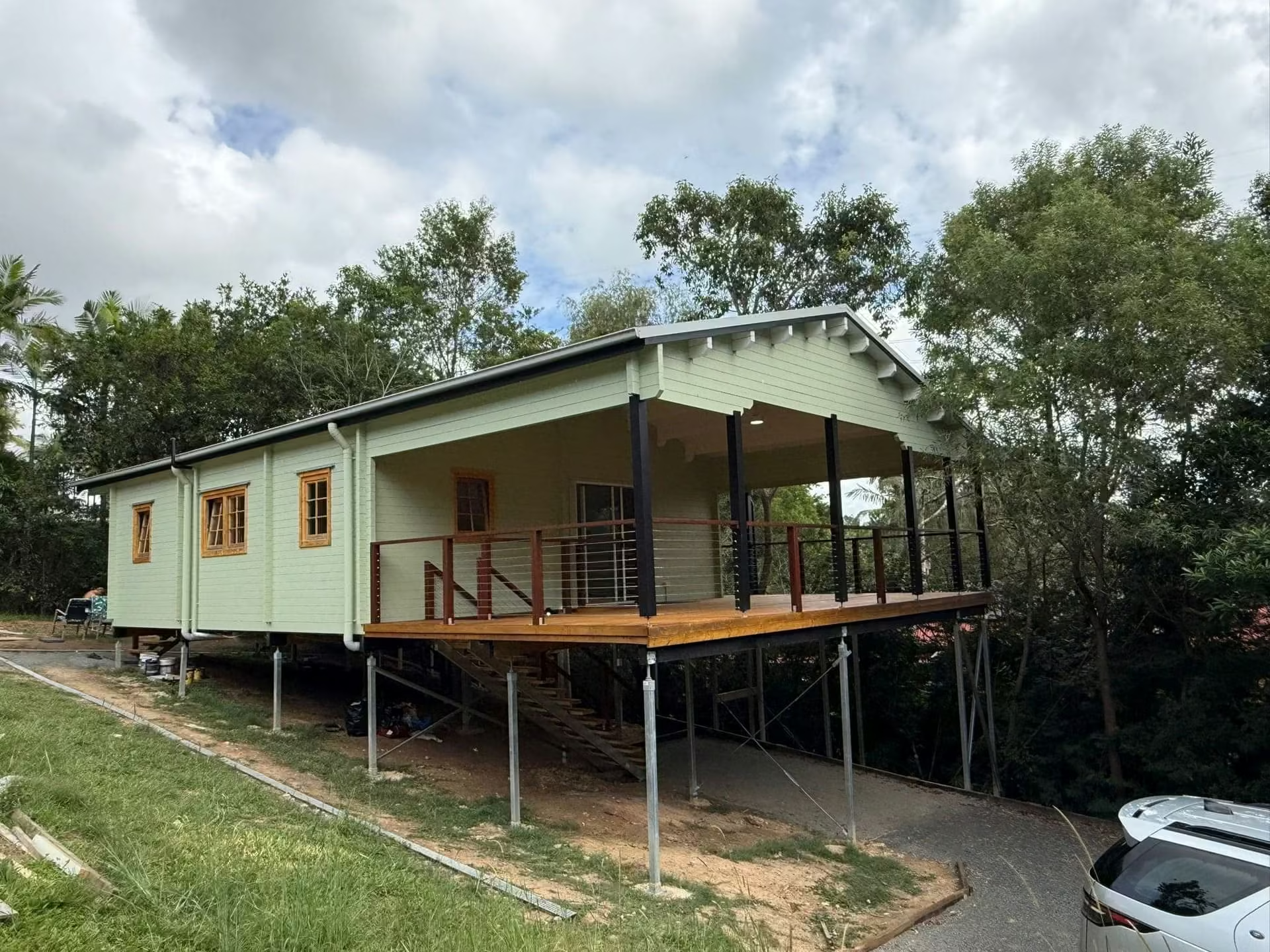
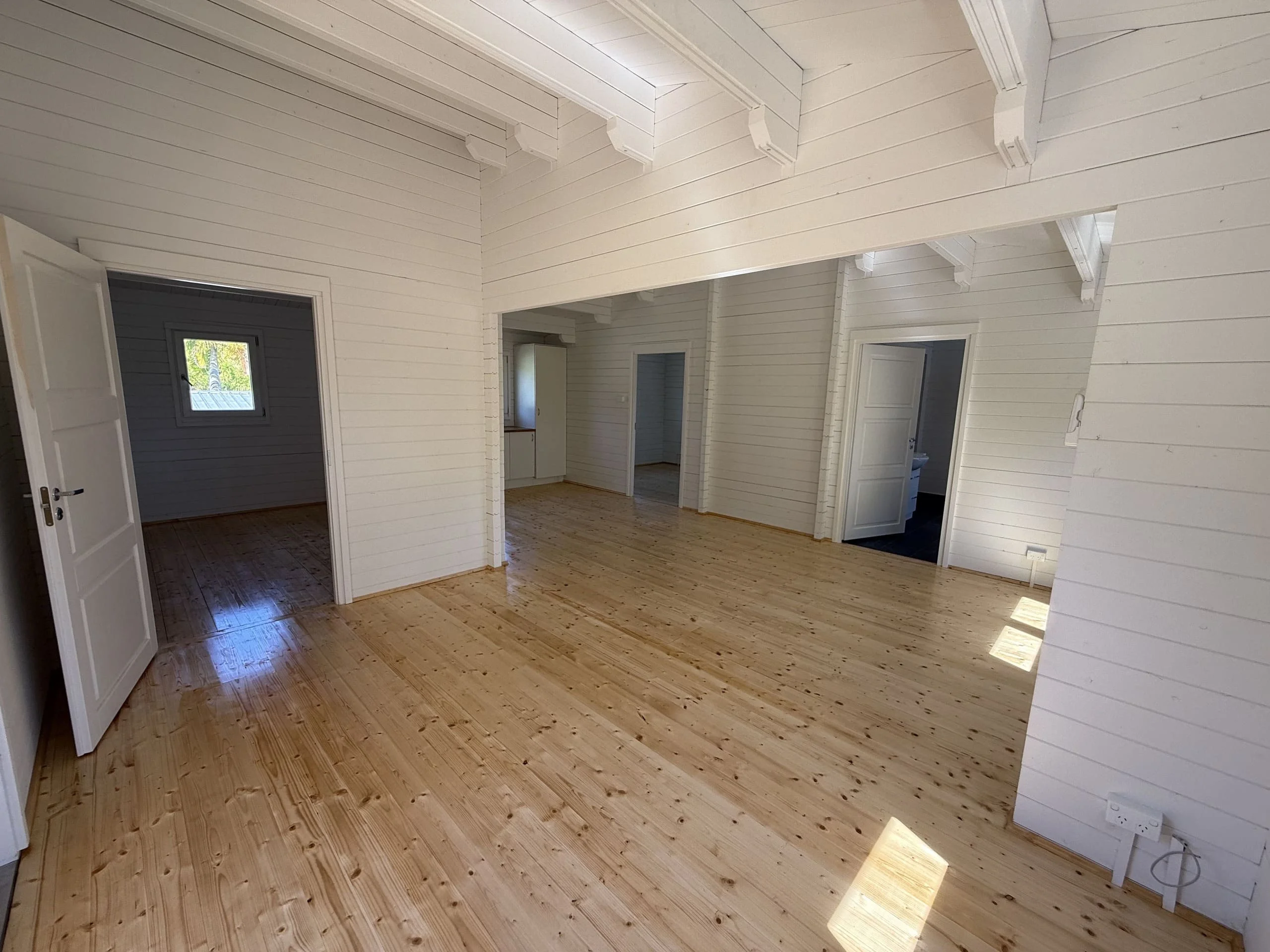
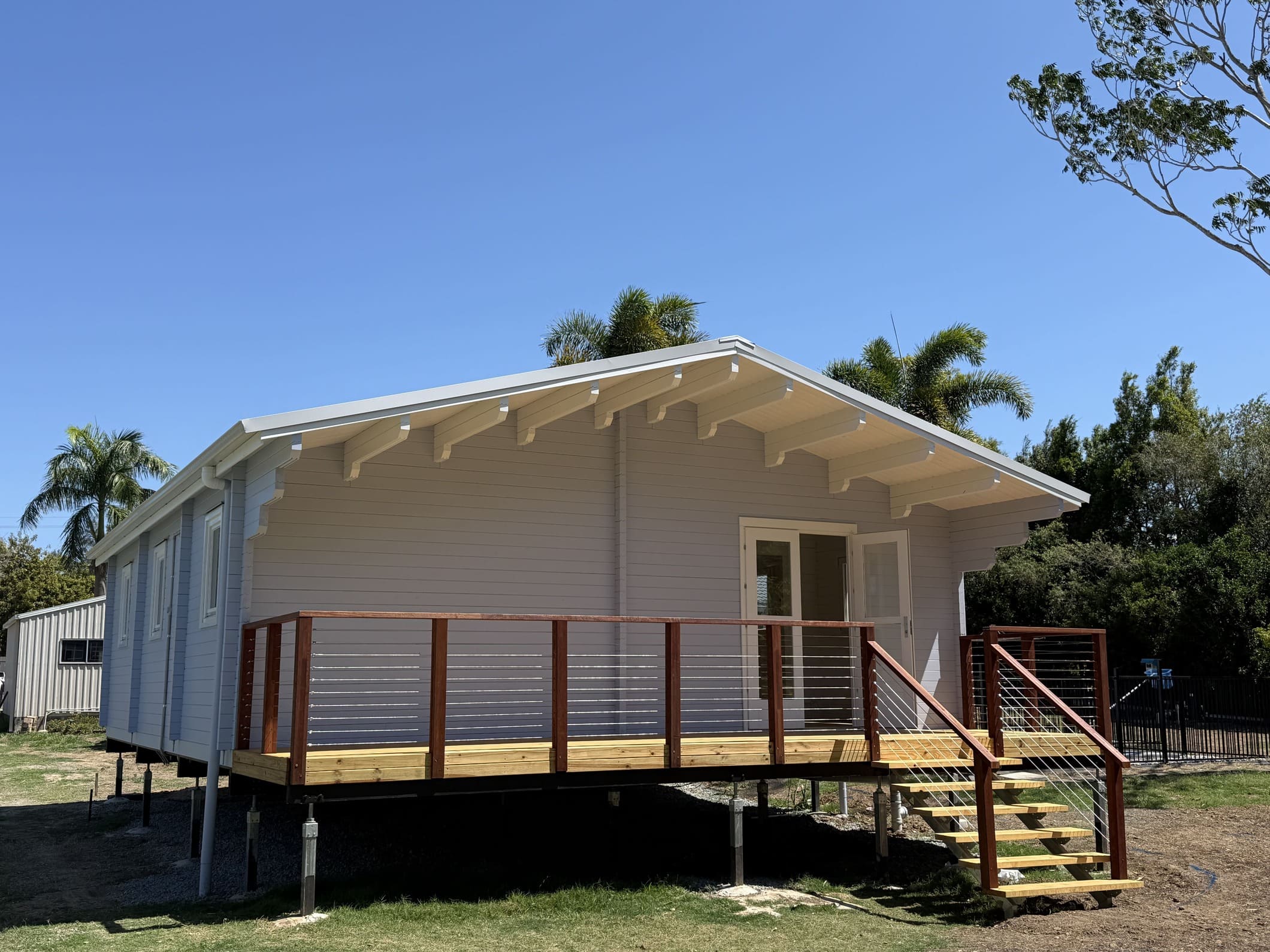
At Timber Garden Cabins, sustainability is not treated as an optional upgrade or marketing feature. It is embedded into every stage of the process — from initial design consultation through to material selection and final construction. By combining responsibly sourced timber, high-quality craftsmanship and intelligent design principles, we create granny flats that are not only beautiful, but built to endure.
True sustainability means building once — and building properly.
The Foundation of Sustainability: Responsibly Sourced Timber
Why Timber Is One of the Most Sustainable Materials
When discussing sustainable construction, timber consistently stands out as one of the most environmentally responsible materials available. Yet it is often misunderstood. Some assume that using wood contributes to deforestation, when in fact the opposite can be true — provided the timber is sourced correctly.
Responsibly harvested timber comes from carefully managed forests where trees are replanted and ecosystems are protected. In these systems, harvesting is controlled, biodiversity is maintained, and long-term regeneration is prioritised. This creates a renewable cycle rather than a process of depletion.
Unlike many conventional building materials, timber offers a unique combination of environmental and performance advantages. Compared with steel, concrete or brick, timber:
- Is renewable when sourced from sustainably managed forests.
- Stores carbon throughout its lifespan, effectively locking it away within the structure.
- Requires significantly less energy to produce, resulting in lower embodied emissions.
- Provides natural thermal performance, helping regulate indoor temperatures.
Steel and concrete, by contrast, require intensive industrial processing. Cement production alone is responsible for a substantial proportion of global carbon emissions, while steel manufacturing demands high temperatures and significant energy input. Brick production similarly relies on kiln firing, which consumes large amounts of fuel.
Timber, on the other hand, is grown using solar energy. Trees absorb sunlight, water and carbon dioxide to grow — making wood one of the few building materials that is naturally regenerative.
When certified timber from responsibly managed forests is used in a granny flat build, it supports sustainable forestry practices, encourages replanting initiatives and contributes to a circular building economy. Rather than extracting finite resources, it works within a renewable system.
Carbon Storage and Environmental Impact
One of timber’s most significant environmental benefits lies in its ability to store carbon.
As trees grow, they absorb carbon dioxide from the atmosphere through photosynthesis. This carbon becomes part of the tree’s structure — stored within the trunk, branches and fibres. When the tree is harvested responsibly and used in construction, that carbon remains locked inside the timber for decades, often for generations.
In practical terms, this means that a timber granny flat does not merely avoid high emissions during manufacturing — it actively stores carbon within its structure.
By comparison:
- Concrete production generates high levels of carbon dioxide during cement manufacturing.
- Steel production requires energy-intensive extraction and smelting processes.
- Brick manufacturing depends on prolonged high-temperature kiln firing.
These materials contribute significant upfront embodied emissions before the building is even occupied.
A premium timber granny flat therefore begins its life with a lower embodied carbon footprint. Combined with energy-efficient design and high-performance insulation, this foundation sets the stage for a dwelling that is environmentally responsible both in construction and operation.
Choosing timber is not simply an aesthetic decision — it is a strategic environmental choice. When sourced responsibly and constructed with care, timber forms the backbone of a granny flat that is sustainable from the ground up.
High-Performance Insulation: The Hidden Hero of Eco-Friendly Homes
Why Insulation Matters More Than You Think
Even the most beautifully constructed granny flat will fail to perform sustainably without proper insulation.
Insulation impacts:
- Heating and cooling costs
- Indoor comfort
- Moisture control
- Long-term durability
Poor insulation leads to higher energy bills and unnecessary strain on heating and cooling systems.
Sustainable Insulation Options
Modern eco-friendly granny flats may incorporate:
- High-density glass wool or polyester insulation
- Rigid foam panels with strong thermal resistance
- Reflective foil insulation in roofing systems
The key is achieving optimal R-values suitable for Queensland’s climate conditions.
By combining timber construction with effective insulation, a granny flat can maintain stable indoor temperatures year-round — reducing reliance on air conditioning.
Energy-Efficient Windows and Glazing
Reducing Heat Transfer
Windows are often the weakest thermal link in any home. In warmer climates such as Queensland, excessive heat gain can significantly increase cooling requirements.
Premium granny flats incorporate:
- Double glazing
- Thermally broken frames
- Low-emissivity (Low-E) glass
- Proper sealing and installation
These features reduce heat transfer, improve comfort, and lower electricity consumption.
Strategic Window Placement
Sustainability is not just about materials — it is also about design.
Smart window positioning can:
- Maximise natural light
- Reduce artificial lighting needs
- Encourage cross-ventilation
- Harness passive solar heating in cooler months
Thoughtful design ensures that a granny flat works with the environment rather than against it.
Passive Solar Design: Working with Nature
What Is Passive Solar Design?
Passive solar design refers to orienting and designing a building to naturally regulate temperature without mechanical systems.
In practical terms, this includes:
- North-facing living areas
- Shaded western walls
- Roof overhangs
- Cross-ventilation pathways
- Thermal mass elements where appropriate
When properly implemented, passive design reduces the need for artificial heating and cooling.
Why It Matters in Queensland
Queensland’s climate demands intelligent design. A sustainable granny flat must address:
- Intense summer heat
- Humidity
- Seasonal weather variations
By combining premium timber construction with passive solar principles, homeowners enjoy year-round comfort with reduced energy use.
Low-VOC Materials and Healthy Indoor Air Quality
What Are VOCs?
Volatile Organic Compounds (VOCs) are chemicals found in many paints, adhesives, sealants and finishes. They can off-gas into indoor air, potentially affecting health and comfort.
Why Low-VOC Choices Matter
A premium eco-friendly granny flat prioritises:
- Low-VOC paints
- Water-based finishes
- Non-toxic adhesives
- Formaldehyde-free cabinetry
This ensures healthier indoor air quality — particularly important when granny flats are used for elderly family members or children.
Sustainability is not only about the environment — it is also about wellbeing.
Durable Materials Reduce Long-Term Waste
Sustainability Through Longevity
One of the most overlooked aspects of eco-friendly construction is durability.
A structure that requires constant repair or replacement:
- Generates additional waste
- Increases resource consumption
- Raises long-term costs
Premium timber homes are engineered for structural integrity and resilience.
The Importance of Quality Construction
Cutting corners during construction can lead to:
- Warping or structural issues
- Moisture intrusion
- Premature material failure
By investing in high-quality craftsmanship, homeowners reduce future environmental impact and protect their investment.
If you are exploring your options, you can learn more about our approach to design and build quality on our Granny Flats page.
Energy Efficiency Beyond Materials
Solar Power Integration
Adding solar panels to a granny flat can dramatically reduce reliance on grid electricity.
Benefits include:
- Lower energy bills
- Reduced carbon footprint
- Increased property appeal
When paired with energy-efficient construction, solar systems perform even more effectively.
LED Lighting and Smart Controls
Energy-efficient granny flats also include:
- LED lighting throughout
- Energy-rated appliances
- Smart thermostats
- Water-saving fixtures
These small decisions collectively make a significant impact.
Water Efficiency and Sustainable Plumbing
Rainwater Collection
Where appropriate, rainwater tanks can be integrated into granny flat designs to:
- Supply garden irrigation
- Reduce mains water consumption
- Lower utility costs
Efficient Fixtures
Eco-friendly homes incorporate:
- Low-flow taps and showerheads
- Dual-flush toilets
- Water-efficient appliances
Water conservation is particularly important in Australia’s climate conditions.
Minimising Construction Waste
Prefabrication and Controlled Manufacturing
Modern timber granny flats often benefit from prefabricated elements.
Advantages include:
- Reduced onsite waste
- Greater material precision
- Shorter build times
- Improved quality control
Efficient planning reduces excess material use and minimises landfill contributions.
Thermal Performance and Comfort
Why Comfort Equals Sustainability
An uncomfortable home leads to increased reliance on heating and cooling systems.
A premium timber granny flat offers:
- Stable internal temperatures
- Reduced drafts
- Effective moisture management
- Natural airflow
This creates a comfortable living environment with lower energy consumption.
The Financial Benefits of Sustainable Materials
Lower Operational Costs
Although sustainable materials may involve higher upfront investment, they typically provide:
- Reduced energy bills
- Lower maintenance costs
- Greater durability
- Improved resale value
Over time, the savings often outweigh the initial expenditure.
Long-Term Property Value
Eco-friendly homes are increasingly attractive to buyers and tenants.
A well-built, energy-efficient granny flat can significantly enhance overall property value.
If you are considering building in Queensland, you may wish to explore our insights on Granny Flats in Brisbane.
Why Premium Timber Homes Stand Apart
Craftsmanship Matters
A sustainable granny flat is not defined by marketing claims — it is defined by build quality.
Premium timber homes offer:
- Engineered structural systems
- Precision manufacturing
- High-grade finishes
- Attention to detail
This ensures performance, longevity and comfort.
Design That Reflects Modern Living
Sustainability must also meet modern lifestyle expectations.
A well-designed granny flat balances:
- Functionality
- Aesthetics
- Efficiency
- Durability
To see examples of thoughtful design, visit our Projects page.
The Role of Professional Guidance
Building sustainably requires expertise.
From council approvals to material selection, experienced professionals ensure:
- Compliance with local regulations
- Correct site preparation
- Optimal orientation
- Structural integrity
If you are at the early planning stage, our team can guide you through the process — from concept to completion.
You can also read more about our complete Design & Construction Process.
Bringing It All Together: What Truly Makes a Granny Flat Eco-Friendly?
A premium eco-friendly granny flat combines:
- Responsibly sourced timber
- High-performance insulation
- Energy-efficient glazing
- Passive solar design
- Low-VOC finishes
- Water-efficient systems
- Durable craftsmanship
It is not about ticking one sustainability box — it is about integrating sustainable thinking into every element of the build.
When these components work together, the result is:
- Lower environmental impact
- Reduced running costs
- Improved comfort
- Long-term durability
- Enhanced property value
Conclusion
Sustainable construction is no longer a niche concept — it is the future of residential building in Australia.
Choosing premium timber materials for your granny flat is not simply an aesthetic decision. It is an investment in performance, comfort and environmental responsibility.
From responsibly sourced timber to energy-efficient glazing and passive design principles, every material and design choice contributes to a home that works in harmony with its surroundings.
A truly eco-friendly granny flat is built to last — structurally, financially and environmentally.
If you are considering building a sustainable granny flat on your property, our team at Timber Garden Cabins can help you create a premium timber home that combines craftsmanship, efficiency and long-term value.
Visit www.timbergardencabins.com.au or book your free Granny Flat expert consultation here.